
There's a reasonable debate that happens in every homeowner's head when something breaks or needs attention: do I try to handle this myself, or do I call someone? Both options have real costs — time, money, the risk of making things worse — and neither answer is always right.
This article aims to give you a practical framework for making that call. It's not about discouraging anyone from DIY work — competent homeowners can and should handle many things themselves. It's about helping you recognize the situations where professional help saves time, money, and headaches.
The Core Question: What Happens If It Goes Wrong?
The most useful way to evaluate any repair is to ask yourself what the realistic downside is if it doesn't go well.
For many repairs, the downside is minor. If you attempt to patch a small drywall hole and the result isn't perfectly smooth, the worst outcome is that it looks a little rough and you might need to try again or call someone to redo it. The stakes are low.
For other repairs, a mistake can be significantly more serious. An electrical repair done incorrectly can create a fire hazard that isn't immediately obvious. A plumbing repair that seems to be working can fail quietly inside a wall. Structural issues addressed incorrectly can worsen over time.
Once you've assessed the downside, factor in your actual skill level honestly — not your hypothetical skill level after watching a few tutorials — and the availability and cost of the right tools.
Repairs That Are Generally Fine to DIY
A lot of common household maintenance can be handled by someone with basic tools and a willingness to follow instructions carefully. These tasks typically have low risk of serious damage if done imperfectly, and the information needed is genuinely accessible.
Reasonable DIY Tasks
- Touching up paint on walls or trim
- Caulking around a bathtub or sink (after removing old caulk properly)
- Replacing outlet and switch cover plates
- Tightening loose cabinet hinges and hardware
- Replacing a toilet seat
- Clearing a slow drain with a plunger or basic snake
- Replacing a door handle or deadbolt
- Patching very small nail holes with pre-made patching compound
- Replacing a showerhead
- Installing a new toilet flapper or fill valve (with the water shut off)
The most important DIY rule: If you start a job and encounter something unexpected — wiring that doesn't look right, a pipe that's more corroded than expected, damage that's more extensive than you anticipated — stop and reassess before continuing. Knowing when to stop is just as important as knowing how to start.
When to Call a Professional
The following situations are ones where professional help is generally the right call — not because homeowners can't handle complexity, but because the risk-benefit analysis shifts significantly.
Anything Involving the Electrical Panel
Replacing a switch or outlet with the power off is one thing. Working inside the electrical panel — adding circuits, replacing breakers, or investigating issues there — is another. Panels carry live voltage even with the main breaker off, and mistakes can have serious consequences. This is work for a licensed electrician.
Plumbing That Involves the Supply Main or Drain Reconfiguration
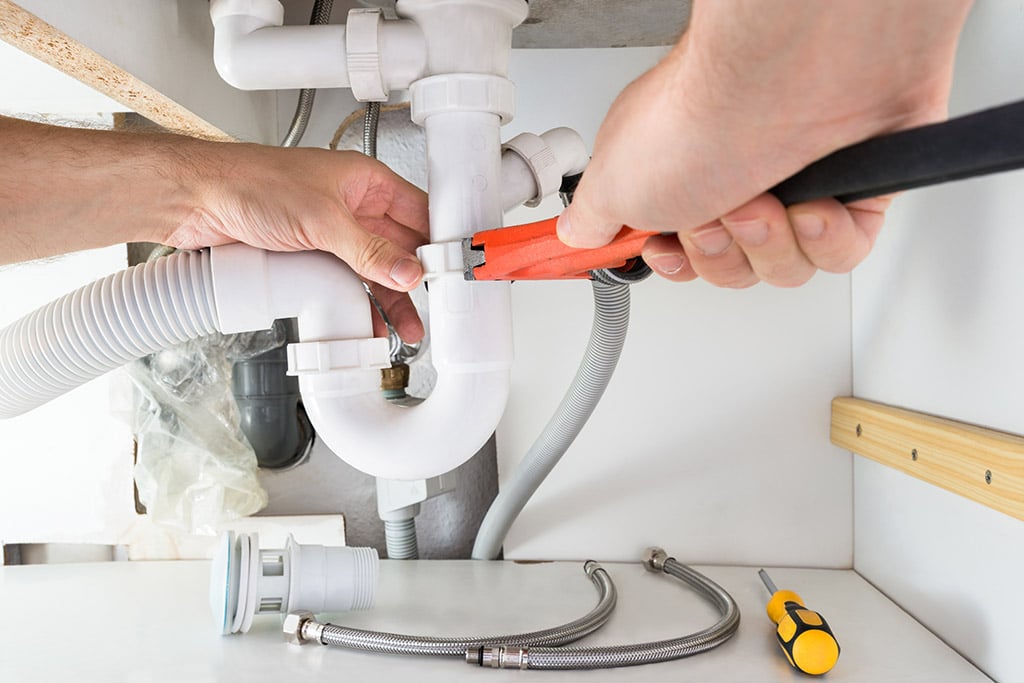
Replacing a faucet cartridge or a toilet flapper are routine jobs. But if the work involves shutting off the main water supply, cutting into supply lines, or reconfiguring drain lines, the complexity and consequences of mistakes increase substantially. A professional handles these more reliably and the cost of their time is almost always less than the cost of a water damage claim.
Drywall Repairs Larger Than a Few Inches
Small patches with pre-mixed compound are manageable. Larger repairs require understanding how to properly bridge and support the patch, how to feather compound over a larger area without obvious ridges, and how to texture-match. A poorly done large patch will be visible under paint and difficult to correct without redoing it properly.
Any Structural Concern
Cracks in foundations, visibly sagging floors, doors that have shifted significantly out of square, or any situation where you suspect a structural element may have moved or failed — these need a professional assessment. Structural issues can be difficult to diagnose correctly and addressing them improperly can mask the problem without solving it.
Work That Requires a Permit
In most Canadian municipalities, certain work requires a permit: electrical upgrades, structural changes, additions, and sometimes plumbing work involving new runs. Work done without a required permit can create complications when you sell your home and may not be covered by insurance. When in doubt, a quick call to your municipality's building department will tell you what applies to your project.
The Cost Argument for Calling a Professional
A common hesitation about calling a professional is cost. And it's a fair consideration — professional labour is not free. But the cost comparison isn't always as clear-cut as it seems.
Consider the actual time a DIY repair requires: research, trips to the hardware store, the repair itself, any correction if the first attempt doesn't work, and cleanup. For someone without experience in that type of work, a job that takes a professional two hours might take a homeowner most of a day — or a weekend.
Factor in the cost of making an error. A plumbing mistake can cause water damage. An electrical mistake can be dangerous. A structural error can be costly to fix properly later. These aren't hypothetical — they happen regularly when people work beyond their skill level.
For most repair professionals, a written estimate is provided before any work is done. Getting an estimate costs nothing and gives you actual numbers to compare against the DIY option with full information.
A Simple Test to Apply
Before deciding, run through these four questions:
- Do I understand what I'm doing? Not just vaguely, but specifically — what the problem is, what the solution is, and what tools and materials are required.
- Do I have the right tools? Not "close enough" tools — the right ones. Many repair mistakes happen because someone used what they had rather than what the job required.
- What's the realistic downside if this goes wrong? Low stakes and a bad outcome is inconvenient. High stakes and a bad outcome is expensive or dangerous.
- Is this something that requires a permit or licensed tradesperson? Some work is legally required to be done by licensed professionals, and this shouldn't be worked around.
If you can answer the first two confidently and the third is low stakes, proceed with the repair. If any of those give you pause, a call to a professional is the better use of your time and money.
If you're not sure whether something is within our scope, call or send a message describing what you're looking at. We'll tell you honestly what we can help with and whether anything you've found needs a different kind of specialist.